What a Wick Actually Does
A wick is not a fuse. It is a fuel-delivery system — and that distinction explains almost every burn problem you will ever encounter.
Capillary action and the mechanics of combustion
Most people think of a wick the way they think of a fuse: light one end, and something burns from there. That model is wrong in a way that matters. A fuse consumes itself. A wick does not — or at least, that is not its job. Its job is to move liquid wax upward into the flame so the flame has something to burn. The wick is a pump.
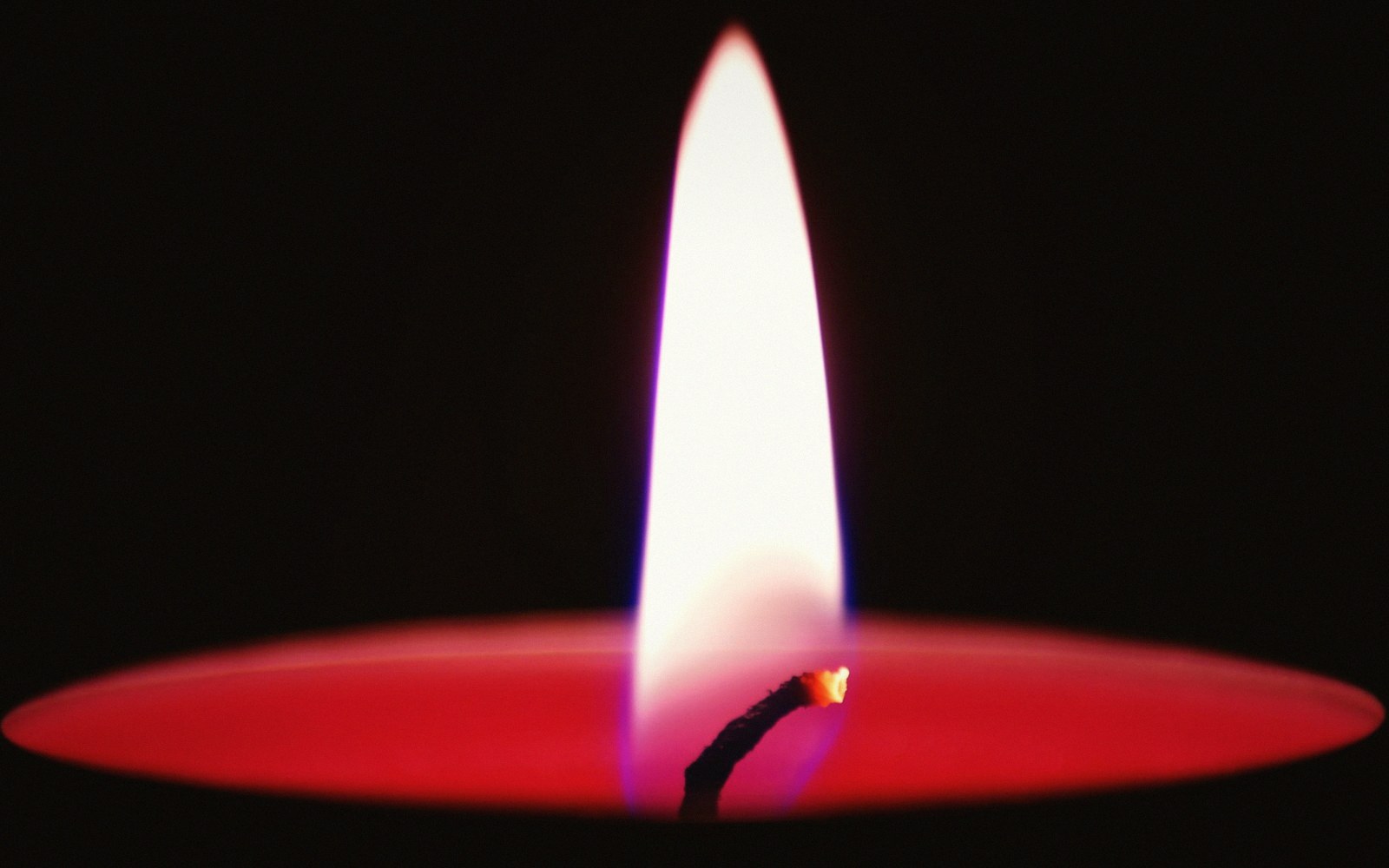
The mechanism is capillary action. Wax, once melted by the flame's heat, is drawn up through the tiny gaps between the twisted or braided fibres of the wick — the same physical principle that pulls water up into a paper towel pressed against a wet surface. The wax travels upward, reaches the combustion zone at the tip of the wick, vaporises, and burns. What you are watching when you watch a candle flame is not burning cotton. It is burning wax vapour. The cotton is just the delivery infrastructure.
This is why the melt pool matters so much. Without liquid wax pooling around the base of the wick, there is nothing to draw up, and the flame starves. A candle that tunnels — burning straight down without melting to the edges — is not just wasting wax. It is progressively cutting off its own fuel supply. The deeper the tunnel, the harder it is for fresh wax to reach the wick, and the smaller and weaker the flame becomes.
Why wick diameter is a design decision, not a default
The diameter of the wick determines how much fuel it can move per unit of time. A wider wick moves more wax, produces a larger flame, generates more heat, and melts a wider, deeper pool. A narrower wick does the opposite. Both can be correct depending on the vessel, the wax, and the fragrance load — but neither is automatically right.
Under-wicked candles produce a small flame, a narrow melt pool that never reaches the jar walls, and increasingly tunnelled burns as the pool deepens and cools the wick. The scent throw will be poor because hot throw depends on a large, hot melt pool releasing fragrance into the air. Over-wicked candles produce too much heat — the flame runs hot, the melt pool is very deep, the wick may mushroom badly, and in a narrow vessel the glass can overheat. Neither failure is catastrophic in the way a house fire is, but both represent a candle that simply does not work.
What makes wick sizing genuinely difficult is that the right answer shifts with every variable. A wick that performs perfectly in a wide, shallow tin will likely be wrong in a tall, narrow jar, even if both are filled with identical wax. The vessel shape constrains airflow and heat distribution. Fragrance oil changes the viscosity of liquid wax and therefore how readily it travels up the wick. A high fragrance load can slow capillary action and effectively under-wick a candle that measured fine in testing with unscented wax.
What the flame is telling you
Once you understand the wick as a fuel-delivery system, the flame becomes legible. A strong, steady, teardrop-shaped flame means fuel is arriving at the right rate. A small, struggling flame means not enough wax is reaching the tip — check the melt pool depth and width. A very tall, flickering flame may mean too much fuel, or a draught is disrupting combustion. A wick that bends toward the wax rather than standing upright is drowning rather than drawing.
The carbon buildup that forms a small bulb at the tip of a long-burning wick is a sign that combustion is incomplete — more fuel is arriving than can cleanly burn, and carbon residue accumulates rather than being fully consumed. Trimming the wick before each burn keeps the delivery rate calibrated to the flame size the candle was designed for.
None of this is complicated once you stop thinking about the wick as something that simply sits there and burns. It is active. It is working. When the burn looks wrong, the wick is usually where to look first — not because it has failed, but because it is telling you exactly what is happening.