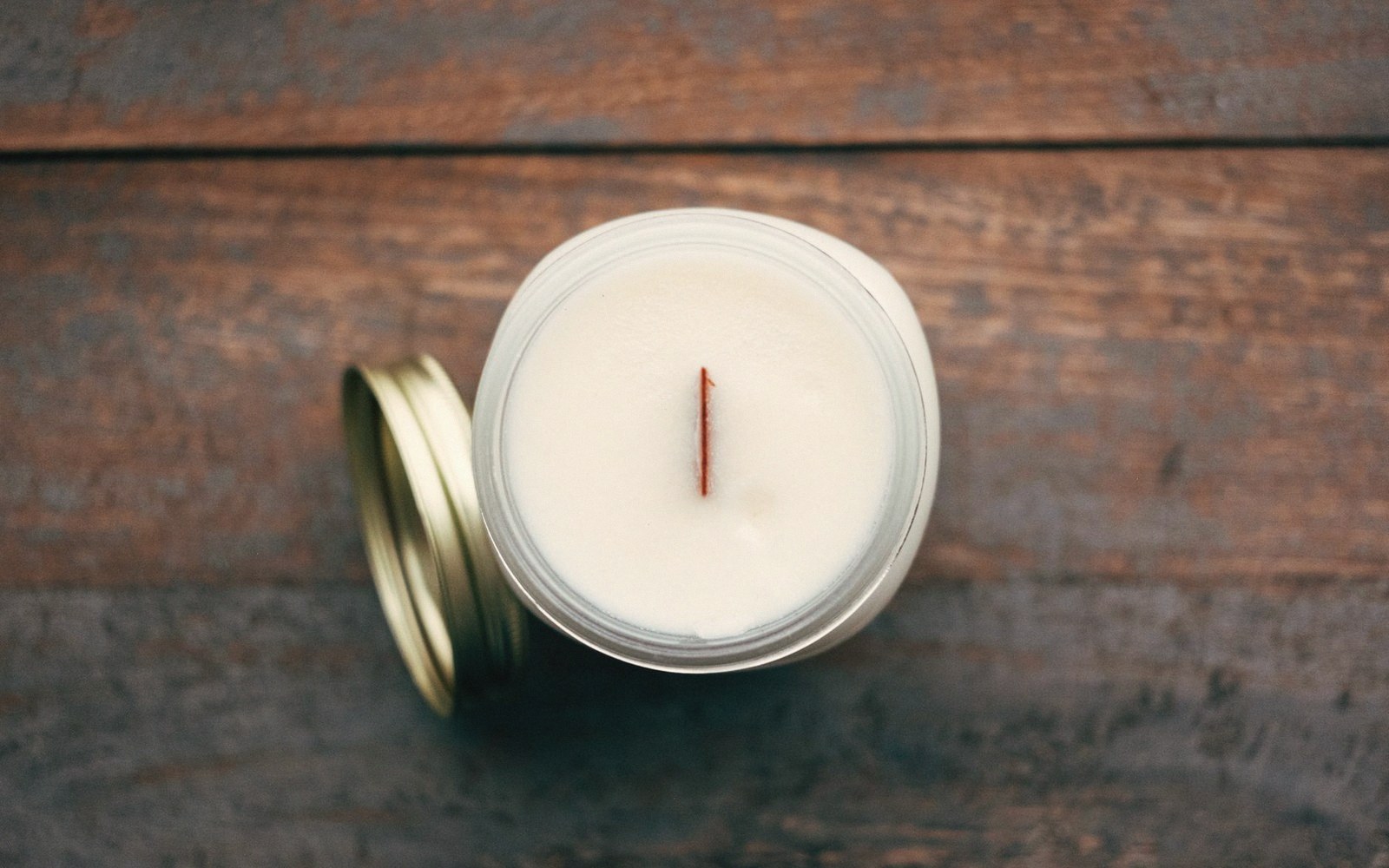
Cold Throw, Hot Throw, and Why They Differ
Lift the lid on an unlit candle and the scent hits you immediately. Light it, and that same scent might bloom into something richer — or fade into almost nothing. These are not the same phenomenon, and they are not caused by the same things.
Cold and Hot Throw Are Two Different Problems
Cold throw is what you smell when the candle is unlit: fragrance molecules diffusing slowly from the wax surface at room temperature. Hot throw is what you smell when it is burning: the melt pool heats the wax and accelerates evaporation, driving fragrance compounds into the air at a rate orders of magnitude higher than cold diffusion allows.
Because the mechanisms differ, a candle can excel at one and fail at the other. A blend might sit in wax very stably — giving a strong cold throw — but contain heavier aromatic compounds that need sustained heat to fully volatilise. Conversely, a candle with a weak cold throw might bloom dramatically once lit, because its fragrance compounds have low volatility at room temperature but release readily once the melt pool reaches working temperature.
The wax itself plays a significant role. Soy wax binds fragrance oil more tightly than paraffin does — a function of its denser, more crystalline structure — which is why soy candles often have a quieter cold throw than comparable paraffin candles. That same tight binding can also smooth out hot throw, moderating both the speed of release and the ceiling it reaches. Paraffin, being less structurally dense, releases fragrance more readily at both stages, which is part of why it remains the dominant choice in commercial candles built for strong room-filling throw.
Fragrance load matters too, but not in the way marketing usually implies. Higher fragrance percentage does not straightforwardly produce stronger throw; beyond the point at which the wax is saturated, excess oil sits unbound and can actually disrupt the burn — affecting the melt pool, the wick's performance, and ultimately the consistency of hot throw. The relationship between concentration and perceived scent is non-linear, and a well-made candle at a moderate fragrance load will frequently outperform an overloaded one.
Why the Gap Between Them Can Be So Large
Fragrance oils are blends of many individual aromatic compounds, each with its own volatility. The lighter top notes — citrus, aldehydic, herbal accents — evaporate quickly and dominate the cold throw. They are also the first to dissipate once the candle is burning. The heavier base notes — resins, woods, musks — need heat to move. A candle that smells primarily of top notes in the jar may shift dramatically in character once lit, becoming warmer, deeper, and sometimes almost unrecognisable. That is not a flaw; it is fragrance chemistry behaving predictably.
The size and character of the melt pool also governs how much of that chemistry you actually experience. A shallow or incomplete melt pool means less surface area for evaporation, and less heat driving the fragrance upward — which is why how a melt pool develops is a reliable proxy for hot throw performance. A wick that is undersized for its vessel will produce a constricted pool and a weak hot throw, regardless of how much fragrance is in the wax.
Room size, airflow, and where you are sitting all shape perception further. But those are variables outside the candle's control. What is inside its control — wax choice, fragrance composition, wick sizing, and the quality of the blend itself — determines whether cold and hot throw are a matched pair or a case of the packaging promising something the flame cannot deliver.