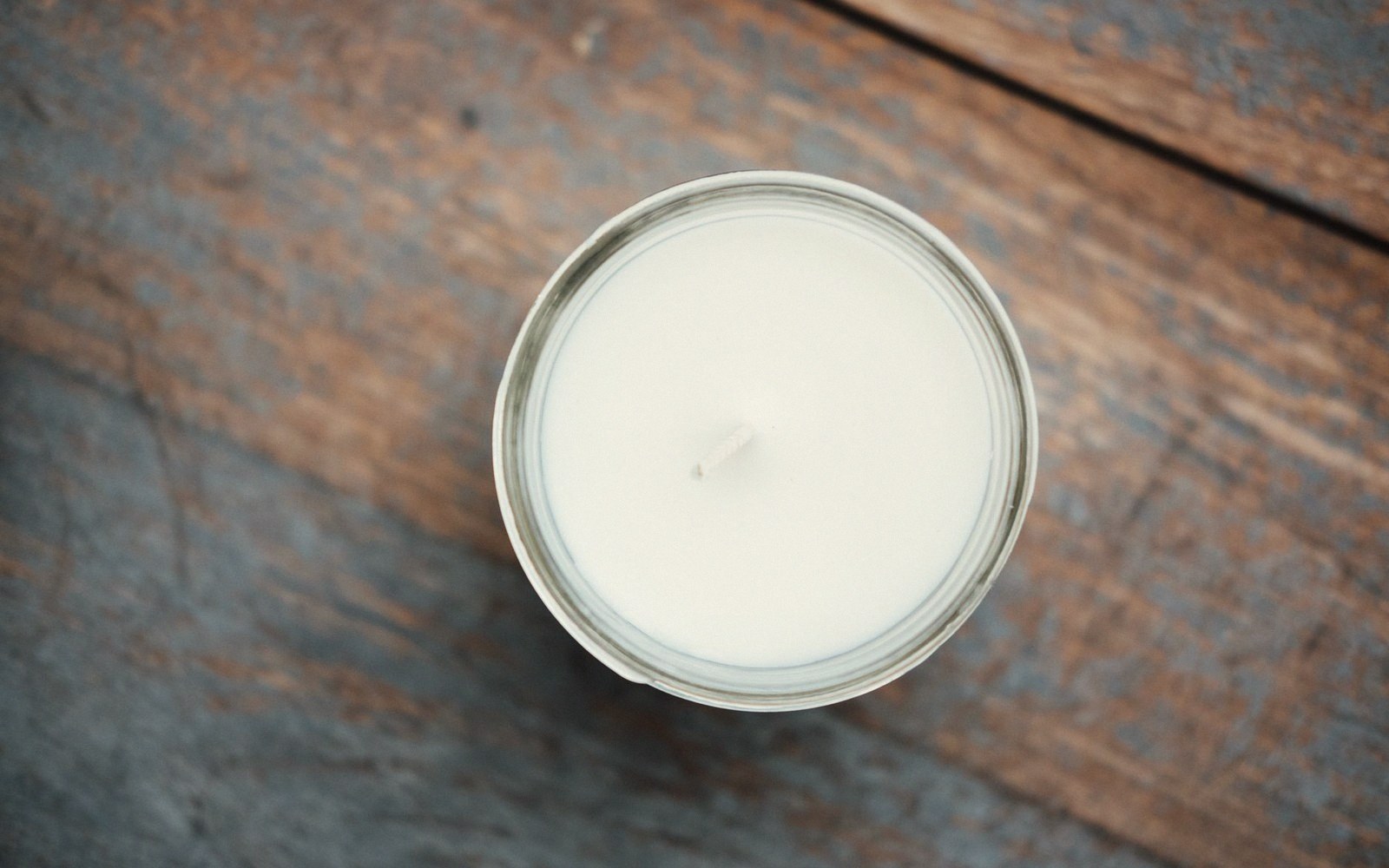
Why Wax Shrinks (And What That Sinkhole Means)
That crater in the surface of a new candle is not a manufacturing flaw. It is physics.
What Happens When Wax Cools
Wax is a hydrocarbon material, and like most hydrocarbons it contracts as it transitions from liquid to solid. When a candlemaker pours hot wax into a vessel, it begins cooling from the outside in — the edges and base solidify first while the centre remains liquid longest. As that central mass finally solidifies and contracts, it pulls inward and downward, leaving a depression, a sinkhole, or sometimes a rough cracked surface at the top.
The degree of shrinkage varies by wax type. Paraffin — particularly harder, higher-melt-point grades — tends to shrink more dramatically than softer waxes, which is why paraffin candles are often given a second pour to top up the surface. Soy wax contracts less aggressively but is notorious for a different cosmetic issue: rough, frosted, or pitted tops caused by the way its natural fatty-acid structure crystallises unevenly. Beeswax sits somewhere between the two. No common candle wax is immune to some form of shrinkage; the question is how much, and whether the maker has compensated for it.
Pour temperature plays a significant role. A hotter pour introduces more heat that must dissipate, which generally means greater contraction. A cooler pour reduces that differential but can create its own surface problems — poor adhesion to the vessel wall, for instance. Makers balance these variables through testing, not guesswork.
What the Sinkhole Actually Tells You
Here is what a sinkhole does not tell you: that the candle is low quality, poorly made, or going to burn badly. A void beneath the surface can look alarming — like the candle is hollow — but a small cavity directly beneath the wick is almost completely irrelevant to burn performance. The wick will reach it, melt through it, and the candle will burn as designed.
What a large or off-centre sinkhole might indicate is that the maker did not top-fill, did not poke-relief the wax during cooling to release trapped air pockets, or poured at a temperature that exaggerated shrinkage. These are process decisions, not catastrophic failures. A smooth, flat candle top is a sign of care in production — a second pour, a steady ambient temperature during cooling — but it is a cosmetic achievement more than a functional one.
The candle industry sells a lot on appearance. A glassy surface, a clean pour line, a wick perfectly centred: these things signal craft, and craft matters. But a slight dip in the surface is honest evidence of physics, not incompetence. Judge the burn, not the crater.