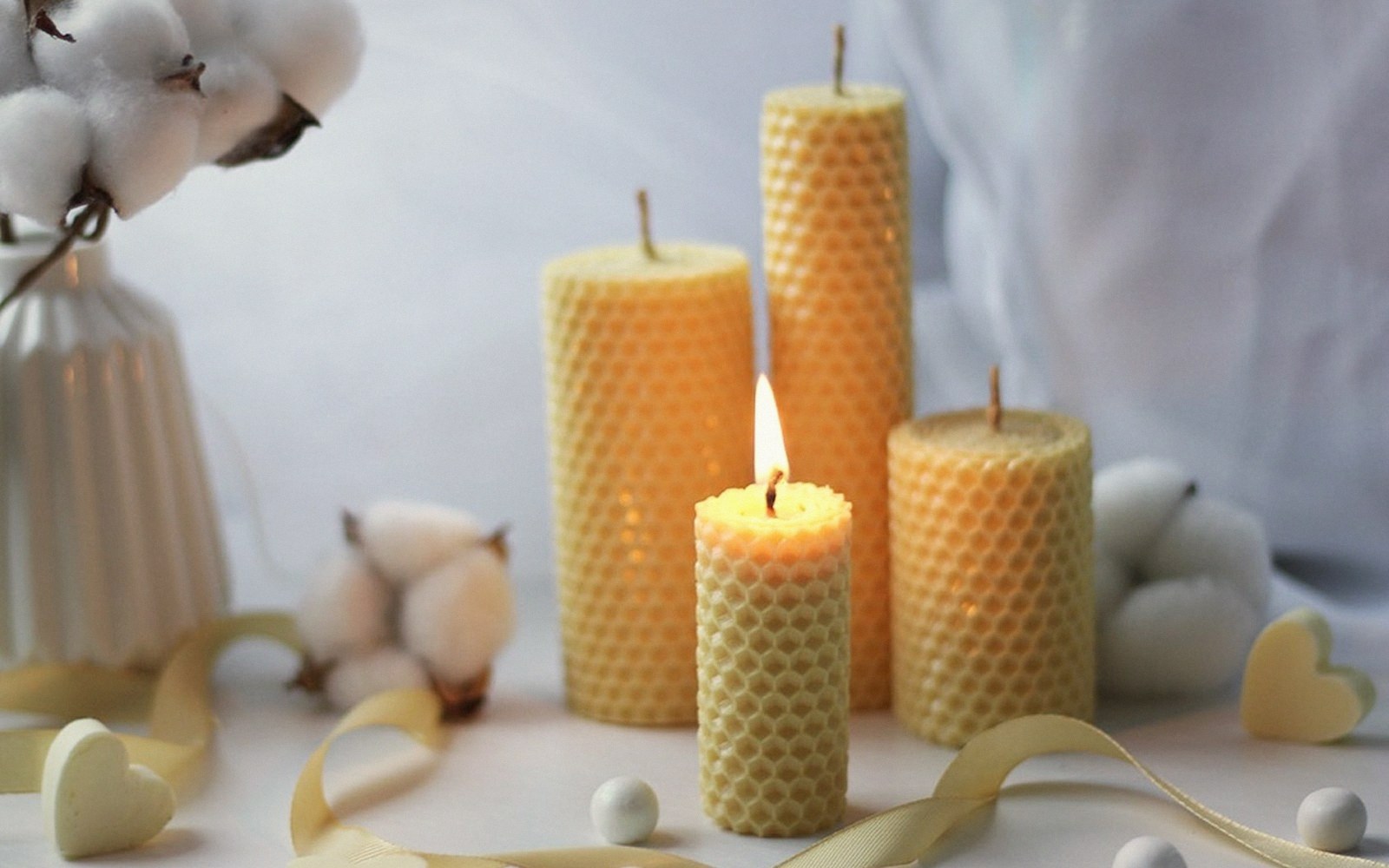
Beeswax: The Real Trade-Offs
The most expensive common wax earns some of its reputation — but not all of it.
What beeswax actually delivers
Beeswax is dense and hard, with a higher melt point than paraffin or soy. That density means it burns slowly — genuinely slowly, not marketing-copy slowly — which is one reason it has held value for centuries. A well-made beeswax candle will outlast a comparable paraffin version, and that changes the cost calculation if you do the maths per burn hour rather than per candle.
The natural scent is real too. Unscented beeswax carries a warm, faintly honey-and-pollen note that comes from the wax itself, not added fragrance. For some buyers that is the point: a candle that smells of something without smelling of a fragrance oil. It is subtle — not a room-filler — and it rewards a smaller, quieter space.
The flame is worth noticing. Beeswax burns with a bright, warm-toned light that is closer to incandescent than the slightly cooler flame of most paraffin candles. This is a real optical difference, not a marketing invention.
Where the trade-offs land
The premium pricing reflects genuine cost. Beeswax is a byproduct of beekeeping, not a manufactured commodity, and supply is finite. That scarcity is built into the price legitimately, which is unusual in a category where premium pricing is often more image than substance.
The trade-off that catches buyers off guard is cold throw and hot throw. Beeswax binds fragrance oils less readily than soy or paraffin, and its high melt point means a container candle needs real heat before it throws scent into the room. If you want a strongly fragranced candle, beeswax works against you. The wax that smells best unlit — that natural honey note — performs modestly once burning, and added fragrance rarely compensates the way it does in a softer wax. Makers who try to push fragrance load in beeswax often hit problems with the wick and the burn pool before they get the throw they want.
Wick sizing is demanding. Because beeswax is hard and the melt pool forms slowly, choosing the right wick for a beeswax container candle is genuinely tricky. An undersized wick tunnels readily. An oversized one smokes. The margin is narrow.
There is also an authenticity problem in the market. Candles labelled "beeswax" sometimes contain a blend, not pure beeswax. Checking whether a product declares its full wax composition — not just leads with the word beeswax — is worth doing before you pay the premium.
Pure beeswax is an honest material with honest limitations. The burn is long, the natural scent is lovely, and the performance with added fragrance is moderate at best. Know which of those things you are actually buying it for.