Placement, Airflow, and Why the Flame Tells You When Something Is Wrong
The flame is constantly reporting on its environment. Learning to read it takes about thirty seconds.
What the Flame Is Actually Telling You
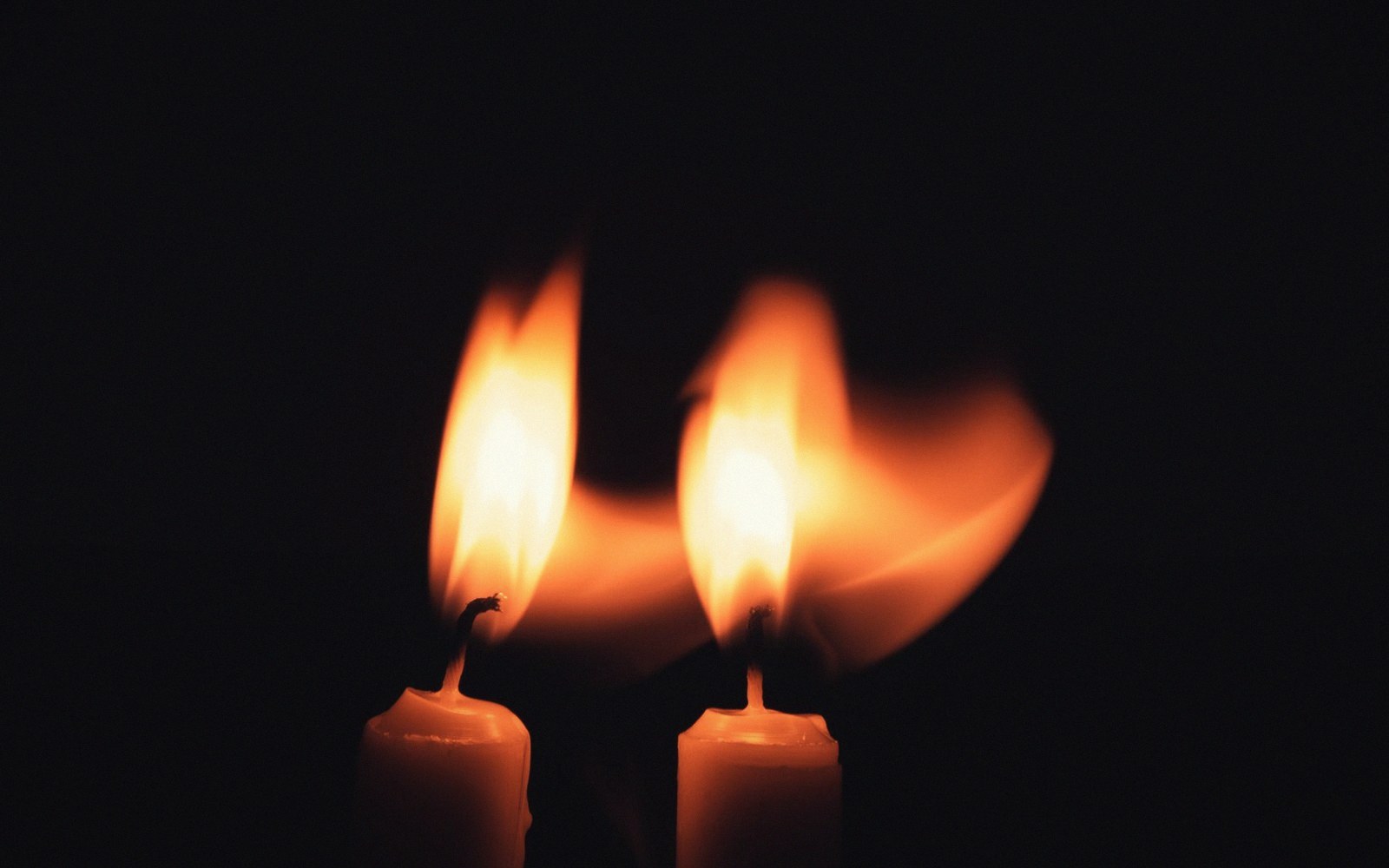
A healthy candle flame sits upright, burns steadily, and holds a consistent teardrop shape. It may flicker briefly when you first light it, but within a minute or so it should settle. If it doesn't — if it leans persistently to one side, stretches and bends, or gutters and recovers in a rhythm — the candle is in a draught, and the burn is already compromised.
Airflow is the most common placement mistake, and it operates invisibly. You might not feel a draught at ankle height, but a candle flame sitting on a coffee table is detecting air movement you've filtered out entirely. Open windows, air-conditioning vents, ceiling fans on their lowest setting, the convective current produced by a nearby radiator — any of these can push a flame off its axis. When a flame leans, the melt pool follows. Wax liquefies faster on the side facing the air movement and slower on the sheltered side, and that asymmetry is exactly what initiates uneven burning. The wax on the sheltered side may never fully melt in that session, leaving a ridge that hardens between burns and gradually takes the candle somewhere it shouldn't go.
Surfaces, Shelves, and Where the Scent Actually Goes
The second placement decision — height and proximity to surfaces — affects both the burn and the fragrance. A candle pushed close to a wall or placed directly beneath a low shelf traps its own heat. The flame has less oxygen to draw on, the wick works harder, and the resulting carbon buildup is a direct consequence of the position, not a defect in the candle. Pull it away from the wall. Give it room.
Height matters for fragrance in a simpler way: hot air rises, and the scent it carries rises with it. A candle placed at floor level in a tall room will distribute its throw differently than one on a mantelpiece. Neither is wrong, but understanding the direction of dispersal helps when you're wondering why a candle that smells vivid in one room feels muted in another. Cold throw and hot throw are properties of the fragrance and the wax — but how far that scent travels is partly a question of where the candle sits.
Sunlight is a quieter problem. A candle left on a windowsill is exposed to UV and heat even when unlit, and both degrade fragrance over time. The wax surface can also soften and pit without ever being burned. It's the most common source of the faded, slightly stale smell a candle develops before you've even got through the first third of it.
The Practical Habit
None of this requires obsessive placement ritual. It requires one look at the flame a few minutes into a burn. If it's upright and still: you're done. If it's leaning, trace the likely source of air movement and shift the candle away from it — even ten centimetres can be enough. If it's flaring high and agitated, something nearby is pushing significant air across it, and continuing to burn in that spot will drive uneven wax consumption and a faster-depleting wick.
A stable flame is a stable burn. A stable burn produces an even melt pool, consistent scent dispersal, and a candle that works the way it was made to work. The flame tells you all of this, in real time, for free. The only requirement is a moment's attention before you walk away and leave it to it.